Journey to Upper Mustang ‘Lo Manthang’: Stepping Into the Forbidden Kingdom of Nepal
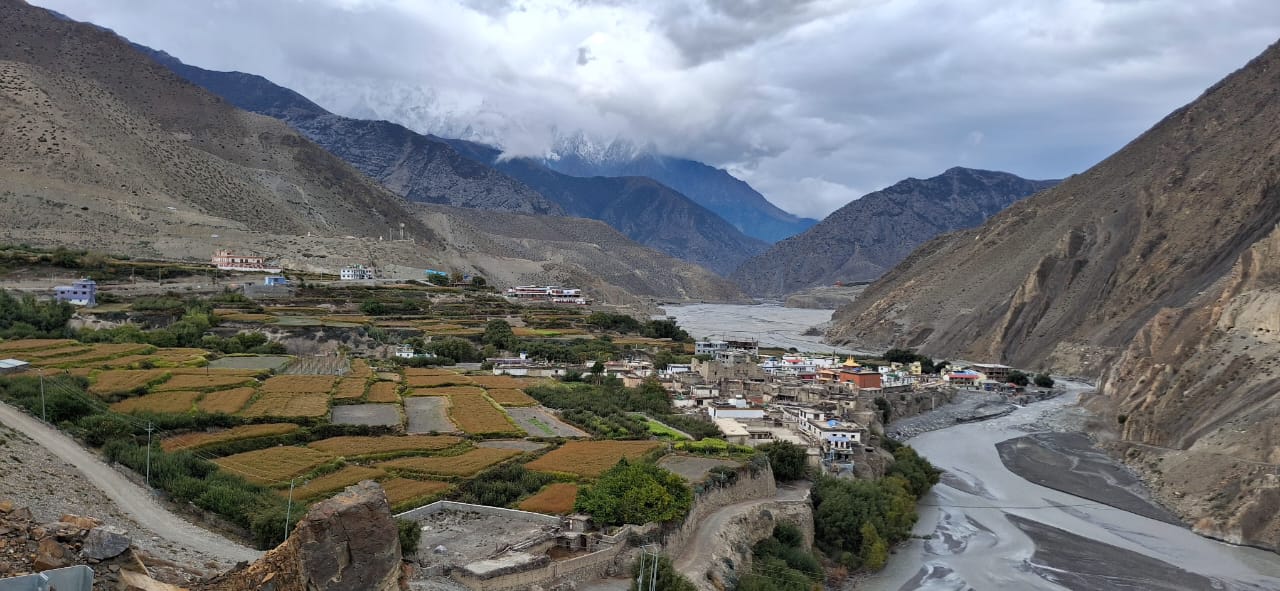
Lo Manthang, located in the trans-Himalayan region of Upper Mustang, is the most isolated and least explored area in Nepal. Actually, it’s the last protected path in the world. This old land has been isolated from the outside world for over 600 years: hence it got the name “The Forbidden Kingdom of Nepal”. If you want a trekking spot in Nepal that is, in a way, luxuriously untouched, then Lo Manthang will definitely give you unforgettable memories.
It is a geographical record of the highlands. The desert behind the Annapurna and Dhaulagiri ranges can be seen from there. No foreign tourists were allowed to visit before 1992. Upper Mustang is a barely known part of Nepal, which is highly unique and unlike others. It is a barren desert, where the Lopa people live, who have preserved their splendid Tibetan culture for many centuries. Every adventurer may discover fresh terrains, hidden caves, and ancient monasteries.
During your trek, the guide leads you to the way, where he will introduce you with the ancient monasteries and caves in and around Lo Manthang. Encountering the old royal palaces, you can see some marvelous ancient structures and paintings back to the 1400s/. This pristine and peaceful kingdom allows visitors a closer look into a traditional way of life that hasn’t changed for hundreds of years. For those wanting a very distinctive lifetime encounter in the Himalaya, it is a perfect trekking route.
The land of Mustang is one of the last Himalayan territories where the Buddhist culture can still be seen living. It is a once in a lifetime chance to discover the lifestyle of Tibetan people. The soul of the local people is revealed during the grand festival; you can also participate and get to know their traditions and customs.
The Walled City of Lo Manthang: A Medieval Himalayan Marvel
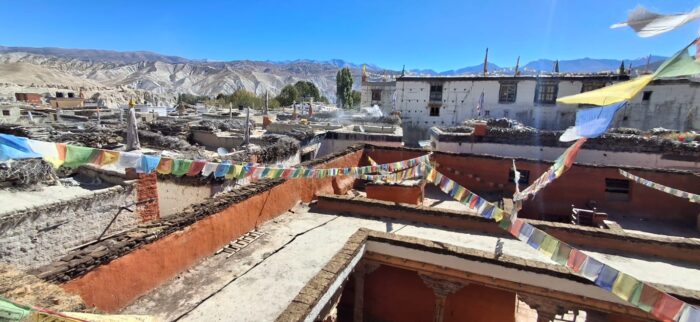
At a height of 3, 800 meters, Lo Manthang is not only a village but an ancient fortified walled city, which can take one back to history just by being there.
Analyzing the history of Lo Manthang city, it was built by the legendary Ame pal around 1380. This city was thriving during the Trans- Himalayan Salt Trade between Nepal and Tibet. The large mudbrick walls, watch towers and narrow streets in the city remain intact in the same way as in the past. This gives a medieval look to the city, which is frozen in time.
If you walk on its streets, you can see:
- Mud-brick houses painted mainly in ochre and white colours.
- Prayer wheels can be seen spinning with the slightest wind.
- The worship and cultural practices of the indigenous Loba community that are passed down from generation to generation.
This area is among the best-preserved regions of Tibetan culture outside Tibet and hence, it is one of the major attractions of the Upper Mustang Trek.
Living Royalty and Authentic Himalayan Hospitality
Although Nepal officially abolished its monarchy in 2008, the people of Lo Manthang continue to honor their royal lineage.
Visitors can still experience a unique cultural connection by staying at places like Royal Mustang Resort, a remarkable blend of traditional architecture and modern comfort.
Built over eight years in extreme Himalayan conditions, the resort reflects:
- Intricate wood and stone craftsmanship
- Warm, traditional interiors with fireplaces
- Authentic local experiences like playing Bagh Chal (Tigers and Goats)
This rare opportunity to experience royal hospitality in Upper Mustang makes the journey even more unforgettable.
Though Nepal formally ended the monarchy in 2008, the inhabitants of Lo Manthang still celebrate their royal heritage.
Staying at a place like Royal Mustang Resort gives the visitors a wonderful cultural exposure. It is a wonderful reconstruction of the traditional building combined with the modern facilities.
The resort was constructed at a slow pace of eight years in the most challenging Himalayan conditions and it exhibits:
- Masterful wood and stone carving
- Cosy, old style room setting with fireplaces
- Original local endeavors like playing Bagh Chal (Tigers and Goats)
Such a very rare chance to live like a royal in Upper Mustang makes the trip a very memorable one.
Exploring Chhoser: The Mystical Land of Sky Caves
A short excursion from Lo Manthang takes you to Chhoser (Garfu) , one of the most mysterious and visually striking places in Nepal.
1.The Sky Caves of Mustang
Carved into towering cliffs, over 10,000 ancient caves have been discovered here, some dating back as early as 800 BC.
These caves served as:
- Ancient dwellings
- Meditation chambers
- Burial sites
Climbing the five-story Shija Jhong Cave is an unforgettable experience, offering breathtaking views and a glimpse into prehistoric Himalayan life.
2.Nyphu Monastery (Sun Cave)
Another must-visit is the cliffside Nyphu Monastery, an important spiritual center of the Sakya Buddhist tradition.
If you’re fortunate, you may witness a traditional Puja ceremony, where monks and locals gather in vibrant attire for blessings, a deeply spiritual and cultural experience.
What Does the Tiji Festival Celebrate?
The festival honors the triumph of Dorje Sonam, the reincarnation of Buddha, over the demon Ma Tam Ru. This dramatic scene of a fight between good and evil brings out the theme of the victory of good over evil. Believing that, it take away negative influences from the land, the animals, and the people of Mustang.
Worshipers from far away from foreign countries trek for several days to reach Lo Manthang, bringing gifts such as wheat, barley, food, firewood, and money. Every village contributes a small part of the grain that is used to make dough demons, which are then burned or destroyed in the ritual processions.
Day‑by‑Day Tiji Festival Experience
- Day 1: Vajra Kilaya Rituals
This ritual is performed inside the ancient Choede Monastery, where lamas conduct Vajra Kilaya rituals. It is an intense Vajrayana practice of meditation, chanting, and confession to cleanse karma, hatred, desire, and jealousy. The wrathful form of the deity is revealed, signifying the eradication of inner and outer demons. - Day 2: The Main Square Ceremony Late morning
The whole community flocks to the town square near to the Royal Palace. The ground is first cleaned and colorful circles are painted to serve as the square dance areas. A huge thangka (scroll painting) of Guru Rinpoche is rolled out, a perfect shot for photographers and cultural travelers. The King of Mustang (although a ceremonial figure since the monarchy was abolished in 2008) is present with his attendants. Lamas wearing masks perform the Nga Cham dance, which are slow movements portraying the birth of Dorje Sonam and the defeat of the demon lord. - Day 3: Monster Masks, Drums, and the Demon Attack
The festival is at the peak of tension and will not go unnoticed. The monks, wearing animal face masks that are centuries old, are accompanied by the sound of gongs and will perform a dance intended to create terror in the evil spirits that are lurking about. The mock fight sequence starts as the dances intensify and the demon attempts to take over the kingdom. For visitors and tourists it provides a unique access to Vajrayana Buddhism; chants, mantras, prayer wheels and the turquoise-laden headdresses. This makes the Lopas the people of Mustang and their festival, Tiji, one of the most unique cultural events in Nepal.
The Journey to Lo Manthang: A Himalayan Adventure Like No Other
The journey to Lo Manthang is just as extraordinary as the destination itself.
Most travelers begin from Pokhara, one of Nepal’s most scenic cities, before heading north into the Mustang region.
Along the way, you’ll pass through:
- Marfa – famous for apple orchards and local brandy
- Muktinath Temple – a sacred pilgrimage site for both Hindus and Buddhists
As you ascend, the lush greenery transforms into a dramatic desert landscape filled with:
- Colorful rock formations
- Deep canyons
- Wind-sculpted cliffs
You may travel by jeep, trek on foot, or even explore by mountain bike crossing high passes over 4,000 meters and passing traditional villages like Tsusang, where festivals like Yartung (horse racing festival) still thrive.
Pro Travel Tips for Upper Mustang Trek (2026)
✔ The Unique Vibe
Expect a fascinating blend of ancient traditions and modern influences, prayer flags fluttering beside motorbikes and small shops selling Tibetan goods.
✔ Must-Try Local Food
- Traditional Dal Bhat
- Sea buckthorn juice (local superfood)
- Apricot brandy from Mustang
✔ Restricted Area Permit
Upper Mustang is a controlled region. Travelers must:
- New Fee Structure: The Restricted Area Permit (RAP) is now USD 50 per day/person.
- Travel with a registered trekking agency
Why Lo Manthang Should Be on Your Bucket List
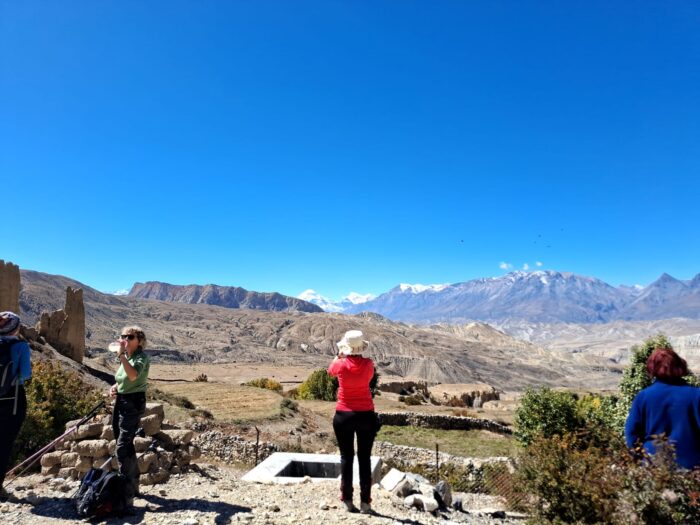
Lo Manthang is not just a destination, it is an alive heritage of Himalayan history and culture. From ancient monasteries and mysterious sky caves to royal traditions and untouched landscapes, every step here tells a story.
For travelers seeking:
- Authentic cultural experiences
- Off-the-beaten-path trekking in Nepal
- A deep connection with history and nature
Plan Your Upper Mustang Adventure
Ready to explore the Forbidden Kingdom? Our expert-guided Upper Mustang Trek packages ensure a seamless and enriching journey through one of Nepal’s most extraordinary regions.
Mode of Transportation in the Upper Mustang Trek
One of the most fascinating aspects of traveling to Lo Manthang is that you can use various transportation options, making it very different from traditional trekking routes in Nepal.
1.Overland Jeep Adventure (Most Popular)
The most common way to reach Lo Manthang today is via a rugged 4WD jeep journey starting from Pokhara and passing through Jomsom.
- Ideal for travelers with limited time
- Comfortable yet adventurous ride through off-road Himalayan terrain
- Covers long distances quickly while still offering scenic views
2.Classic Trekking Route (On Foot)
For adventure seekers, the traditional Upper Mustang Trek on foot remains a rewarding experience.
- Takes around 10–14 days
- Passes through remote villages and monasteries
- Allows deeper cultural immersion with the local Loba community
3.Mountain Biking (Emerging Trend)
Upper Mustang has recently become one of the top mountain biking destinations in Nepal.
- Thrilling downhill trails and desert landscapes
- Suitable for experienced riders
- Combines adventure with cultural exploration
4.Domestic Flight + Overland
Many itineraries combine a scenic flight from Pokhara to Jomsom, followed by a jeep or trek.
- Saves time and avoids long road journeys
- Offers stunning aerial views of the Himalayas
What Makes the Upper Mustang Trek Different from Other Treks in Nepal?
Nepal is famous for treks like Everest Base Camp and Annapurna Circuit, but Upper Mustang offers a completely different experience.
A Rain-Shadow Desert Landscape
Unlike the lush green hills of other trekking regions, Upper Mustang lies in the rain shadow of the Annapurna Massif and Dhaulagiri Massif.
- Dry, dramatic landscapes similar to Tibet
- Unique rock formations and cliffs
- Trekking possible even during monsoon season
Restricted & Preserved Culture
Upper Mustang is a restricted area, meaning:
- Limited number of travelers
- Strong preservation of ancient Tibetan traditions
- Less commercialization compared to other trekking routes
Living Tibetan Heritage
The culture in Lo Manthang is deeply rooted in Tibetan Buddhism.
- Ancient monasteries and rituals still practiced
- Traditional festivals like Tiji Festival
- Authentic lifestyle unchanged for centuries
Unique Historical Sites
Unlike other treks focused mainly on mountains, Upper Mustang offers:
- Sky caves dating back thousands of years
- Walled medieval city
- Royal palace and heritage sites
Flexible Travel Style
Unlike classic treks where walking is the only option, Upper Mustang allows:
- Jeep tours
- Trekking
- Cycling
This flexibility makes it accessible to a wider range of travelers.
Frequently Asked Questions (FAQs) – Upper Mustang & Lo Manthang
1. Where is Lo Manthang located?
Lo Manthang is located in the remote region of Upper Mustang, near the Tibetan border in northern Nepal.
2. Do I need a special permit for the Upper Mustang?
Yes, Upper Mustang is a restricted area. You need:
- A Restricted Area Permit (RAP)
- To travel with a licensed trekking agency
3. How much does the Upper Mustang permit cost?
For foreigners, they must obtain a Restricted Area Permit (RAP) via a government-registered trekking agency in Nepal. The RAP costs $50 per person per day (calculated on a daily basis)
4. What is the best time to visit Lo Manthang?
The best seasons are:
- Spring (March–May)
- Autumn (September–November)
Upper Mustang is also great during monsoon due to its dry climate.
5. How difficult is the Upper Mustang Trek?
It is considered a moderate trek:
- No technical climbing required
- High altitude (up to 3,800–4,000m)
- Suitable for beginners with good fitness
6. Can I reach Lo Manthang without trekking?
Yes, you can travel by jeep or a combination of flight and jeep, making it accessible without long trekking days.
7. How long does the Upper Mustang trip take?
- Jeep tour: 7–10 days
- Trekking: 10–14 days
8. What kind of accommodation is available?
You’ll find:
- Tea houses during the trek
- Comfortable lodges and boutique stays in Lo Manthang like Royal Mustang Resort
9. Is Upper Mustang suitable for mountain biking?
Yes, it has an extraordinary landscape which is one of the best mountain biking destinations in Nepal, especially for experienced riders.
10. What makes Lo Manthang special compared to other destinations?
Its unique blend of history, culture, and landscape, a walled city, ancient caves, and preserved Tibetan traditions makes it unlike anywhere else in Nepal.
Final Thoughts: A Journey Beyond Time
The journey to Lo Manthang is not just about reaching a destination, it’s about experiencing a blend of adventure, culture, and history. Whether you travel by jeep, trek across high passes, or ride through desert trails, Upper Mustang offers an experience that stands apart from all other trekking regions in Nepal.
Related Blogs

Vavada казино оригинальный ресурс – с бонусами и сюрпризами для пользователей ищущих удачу
Vavada казино — это оригинальный и проверенный игровой портал, который уже заслужил доверие большого количества игроков. Vavada casino оригинальный...
Elevate Your Chats: With Crush On Conversations Feel Smooth and Personal
Elevate Your Chats: With Crush On Conversations Feel Smooth and Personal Table of contents Understanding Conversational Flow: Why It...
Avis Casinoly : Notre analyse exhaustif destiné aux gamers français exigeants
Le monde des casinos en ligne expérimente une expansion remarquable en France, et Casinoly s’établit comme l’une des meilleures...
Casinoly Casino: Vielfältige Slots und attraktive Bonusangebote
Das casinoly casino bietet Spielern eine umfangreiche Kollektion an Spielautomaten und attraktiven Bonusprogrammen, die Anfänger und Profis gleichermaßen ansprechen....
Rivo Casino Test: Bietet Rivo Casino Sicherheit und Seriosität?
Rivo Casino hat sich in der Online-Glücksspielbranche etabliert und lockt regelmäßig neue Spieler an. Doch wie vertrauenswürdig ist dieser...
Rivo Casino Online – Aufregende Spielautomaten und verlockende Bonusangebote
Die Welt der Online-Casinos bietet eine faszinierende Vielfalt an Unterhaltungsmöglichkeiten, bei denen Spieler aus einer großen Auswahl von Automatenspielen...
Einzahlungslimits als effektives Mittel zur Begrenzung von Verlusten beim Glücksspiel
Glücksspiel kann schnell aus einer Freizeitaktivität zur finanziellen Schwierigkeit werden. Viele Spieler übersehen die Risiken und verlieren mehr Geld,...
Seven Casino Online – Aufregende Spielautomaten und verlockende Willkommensboni
Die Sphäre der Online-Casinos bietet Spielern eine beeindruckende Vielfalt an Spieloptionen, und seven casino online zeichnet sich aus durch...
Seven Casino Online – Aufregende Spielautomaten und verlockende Willkommensboni
Die Sphäre der Online-Casinos bietet Spielern eine beeindruckende Vielfalt an Spieloptionen, und seven casino online zeichnet sich aus durch...